

Experion can help Australian mid-market and enterprise procurement teams untangle fragmented spend data across sectors from manufacturing to government.
Australian B2B businesses are dealing with a crisis. With rising costs, unstable supply markets, and inflation, procurement leaders are facing spend information scattered across multiple systems. The need of the hour is a centralized system that can consolidate all this data.
Spend analysis software can manage this by consolidating, cleaning, and classifying purchasing activity into one clear picture. Modern platforms use AI to categorize transactions automatically, surface savings opportunities, and give procurement teams the visibility to negotiate harder and buy smarter.
Key Takeaways
- Spend analysis software pulls fragmented purchasing data into one accurate and classified view of spend.
- Australian businesses use it to cut maverick spend, strengthen supplier negotiations, and meet ATO and ASIC reporting requirements.
- Modern platforms rely on AI for data cleansing, classification, and anomaly detection.
- Choosing the right tool means considering your data landscape, the depth of automation, time-to-value, scalability, and the vendor’s generative AI plans.
- Typical ROI: faster insights (months down to days), savings from supplier consolidation, and better compliance and audit trails.
- Implementation works best when you start with high-value categories, define taxonomy early, and pair automation with human review.
What is Spend Analysis Software?
Understanding Spend Analysis
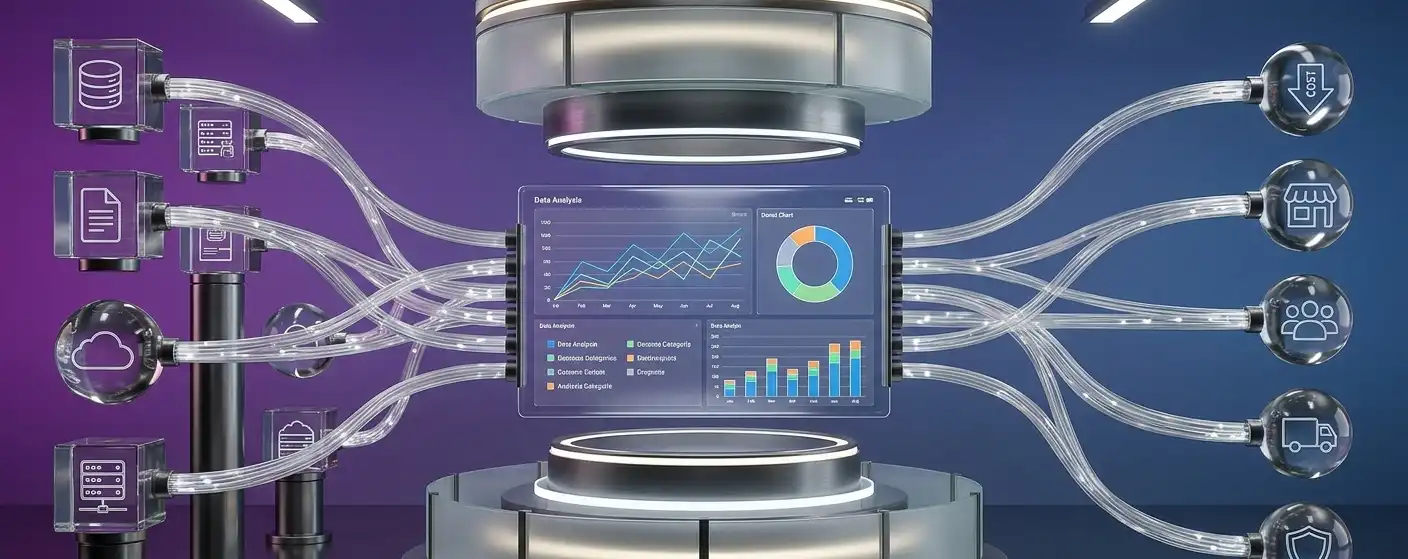
Spend analysis is basically pulling together all your expenditure data, cleaning it up, sorting it into categories, and then identifying money you’re leaving on the table. What are we actually paying each supplier? What’s a category costing us in total? Are two divisions paying different prices for the same item, and nobody’s caught it?
The visibility problem alone justifies doing this. But the real payoff shows once you consolidate duplicate contracts, off-contract buying, and negotiating leverage that was sitting there the whole time. It also makes audits and supplier due diligence far less of a headache, since you’re not reconstructing everything from scratch every time someone asks. On a small scale, a spreadsheet is fine. Past a certain point, you need actual spend analytics software, or you’re just guessing with extra steps.
Why Spend Analysis Matters for Australian Businesses?
The case for spend analysis in Australia is stronger than it’s been in years.
- Supply chain challenges: Freight volatility, raw material shortages, and ongoing disruptions have made supplier visibility and diversification essential.
- Regulatory Compliance: At the same time, compliance expectations continue to tighten. Businesses need accurate records for ATO (Australian Taxation Office) obligations, must meet ASIC (Australian Securities and Investments Commission) reporting requirements, and need to demonstrate transparency in supplier relationships. None of that works without clean, classified spend data underneath it.
- Multi-vendor Complexity: Thousands of suppliers, dozens of categories, often spread across ERP systems bolted together from past acquisitions that never quite got merged properly. Without a system pulling all of that into one place, procurement teams end up spending their week reconciling spreadsheets rather than actually negotiating anything.
- Smarter Supplier Decisions: Spend analysis shows exactly how much you spend with each supplier. This is data that changes your position at the negotiating table. It helps with risk management and supplier consolidation by flagging over-reliance on single vendors. It supports the kind of data-driven decision-making that leading ANZ enterprises now expect from procurement.
The business outcomes show up as concrete numbers: less maverick spend as purchasing is steered back to approved contracts, better supplier contracts negotiated with consolidated volume data, and improved cash flow through smarter payment terms and reduced duplication.
Key Features of a Modern Spend Analysis Solution
Not all platforms are equal. The best ones combine automation, intelligence, and enterprise-grade governance. Here’s what separates a modern spend analytics platform from a basic one.
Automated Data Consolidation
The platform pulls spend data from ERPs, procurement systems, corporate cards, invoices, and spreadsheets into a single repository, eliminating the manual data gathering that used to consume weeks of analyst time.
AI-Powered Data Cleansing & Classification
Machine learning models clean up inconsistent records, resolve duplicate supplier names, and classify transactions into a standard taxonomy with high accuracy. This is the part that turns messy raw data into categories you can actually trust.
Real-Time Spend Dashboards
Interactive dashboards give procurement, finance, and executives live visibility into spend by category, supplier, business unit, and time period without waiting for a quarterly report.
Supplier Performance Analytics
Track supplier spend, delivery, pricing trends, and concentration risk in one place, so data backs performance conversations.
Category Spend Analysis Solutions
Drill into specific categories to see price variance, contract coverage, and tail-spend, supporting targeted category management.
Savings Opportunity Identification
The platform flags off contract spend, price inconsistencies, and consolidation opportunities, turning analysis into a prioritized action list rather than just a report.
Custom Reporting & Visualizations
Build reports for different audiences, from CFO summaries to category manager deep-dives, without needing a data analyst on call for every request.
ERP and Procurement System Integration
Native connectors and APIs plug into major ERP, source-to-pay, and eProcurement systems. This enables spend analytics to feed directly into everyday procurement work.
Role-based Access, Audit Trails, and Compliance Features
Granular permissions, complete audit trails, and compliance controls protect sensitive data and satisfy auditors. This is a significant factor in regulated Australian sectors.
Scalability and Cloud/On-prem Options for Enterprise
Whether you require a cloud-native or on-premise platform, a good platform scales with transaction volume and organizational complexity. The most common platforms are cloud native.
How a Spend Analysis Platform Works?
Spend data analysis moves through five stages, each building on the last.
- Data extraction and normalization: The system pulls transaction data from areas where it lives—ERP, procurement, finance systems—and standardizes formats, currencies, and units. Without this step, nothing downstream is comparable. You are simply looking at numbers that happen to be close to each other.
- Classification and enrichment (AI/ML): This is where AI and machine learning do most of the work. Each transaction is mapped to a category taxonomy, supplier identities are resolved (the same vendor often appears under three different names across systems), and attributes such as location or supplier diversity status are added.
- Analysis and insights generation: Once the data is clean and classified, it moves into analysis: dashboards and reports that show spending patterns, savings opportunities, and risk exposure. This is usually the part people picture when they think “spend analytics,” but it only works because of the two stages before it.
- Actioning and integration with procurement workflows: Connecting insights to source-to-pay (S2P) and eProcurement processes so findings turn into contract renegotiations, supplier consolidation, and policy changes.
- Continuous monitoring and alerts: The platform tracks spend in real time and flags anomalies, contract expirations, and emerging risks as they arise, rather than waiting for the next review cycle.
How AI is Transforming Spend Analytics?
AI has taken spend analytics out of the quarterly review cycle and made it run all the time, looking forward rather than only backward. Here’s where that actually shows up:
- Intelligent spend categorization: Categorization is the clearest case; software can now sort millions of transactions more accurately than any manual coding team ever managed, and it keeps getting sharper as it learns your taxonomy.
- Predictive procurement analytics: It forecasts future spend by category and supplier, helping teams budget accurately instead of reacting after the fact.
- Anomaly detection: Flags unusual transactions, price spikes, and off-pattern purchasing that might point to errors, fraud, or contract leakage.
- Supplier risk prediction: Looks at financial health signals, concentration exposure, and performance trends to flag vulnerabilities before they disrupt operations.
- Automated recommendations: It goes beyond reporting to suggest specific actions: which suppliers to consolidate, which contracts to renegotiate, and where to redirect maverick spend.
- Conversational analytics and dashboards: Let people ask questions in natural language about their spend data, so non-analysts can explore it without writing a query.
Start building a smarter spend analytics platform.
See how AI-powered spend analysis can improve procurement decisions and reduce costs
Spend Analysis Tools for Procurement: How to Choose the Right Spend Analysis Software?
 Picking a platform is a strategic decision, not a checkbox exercise. Here’s a framework for evaluating vendors against your organization’s actual needs.
Assessment Checklist
Before you shortlist vendors, clarify your data sources, category complexity, integration requirements, compliance obligations, user base, and budget. Knowing your environment helps you buy more or less than you need.
Step 1 – Define Your Spend Data Landscape
Spend data lives in the following systems: ERPs, finance platforms, card providers, and spreadsheets. The messier this is, the more you’ll rely on strong automated consolidation and cleansing.
Step 2 – Prioritize AI & Automation Capabilities
Manual classification doesn’t scale. Look for proven AI-driven categorization, deduplication, and enrichment, and ask vendors directly about their accuracy rates and how the models improve over time.
Step 3 – Evaluate Time-to-Value (Speed of Implementation)
Some platforms deliver classified spend visibility in weeks; others take months. Ask for realistic timelines and references for customers of a similar size and complexity.
Step 4 – Check Scalability and Taxonomy Flexibility
Your business will grow and change. The platform needs to handle rising transaction volumes and let you adapt your category taxonomy without a costly re-implementation.
Step 5 – Validate Vendor Roadmap on Generative AI
Generative AI is changing procurement at a rapid pace. Pick a partner with a credible plan for conversational analytics, automated recommendations, and procurement copilots.
Step 6 – Pricing Models & TCO Considerations
Look past the license fee. Factor in implementation, integration, data cleansing, support, and internal effort; the lowest sticker price rarely means the lowest total cost.
Benefits and ROI Using Automated Spend Analysis Software
- Faster insights: Organizations report faster insights, with analysis cycles dropping from months to days as automation takes over manual data wrangling.
- Cost savings from supplier consolidation and renegotiation: They see these as duplication and off contract spend that had gone unnoticed coming into view.
- Improved supplier negotiations: They get better supplier negotiations because consolidated volume data shifts leverage toward the buyer.
- Faster reporting: Reporting speeds up, with board- and audit-ready outputs available on demand.
- Improved compliance and auditability: Compliance and auditability improve since clean data and complete audit trails satisfy ATO, ASIC, and internal governance requirements.
- Better strategic sourcing decisions via predictive analytics: Sourcing decisions improve as predictive analytics informs category and supplier planning.
Example KPI improvements: Less maverick spend, a sharp drop in days-to-insight, and better contract coverage across categories.
Experion is well positioned to build and implement spend analytics platforms for Australian businesses end-to-end, from data consolidation through to the AI layer, so reach out if you want a second opinion on your current setup.
Challenges Organizations Face When Implementing Spend Analysis Software
Implementation is rarely smooth. Knowing the common obstacles ahead of time helps.
Poor data quality
Bad source data is the most common one — incomplete, inconsistent, full of gaps. AI cleansing tools can clean up a lot of it, but starting with data that’s at least reasonably trustworthy still gets you to real results faster than hoping the AI fixes everything downstream.
Multiple ERP systems
Multiple ERP systems tend to show up after a few mergers, and nobody bothered to integrate fully. There’s no shortcut here; you need genuine integration and normalization work.
Change management
Spend analysis changes how procurement operates day-to-day. Without executive sponsorship and clear communication, teams push back on new workflows and reporting expectations.
Inconsistent supplier naming
The same supplier can show up under a dozen name variants across systems. Getting supplier normalization right is critical to accurate consolidation.
Legacy procurement processes
Legacy procurement processes cap how much value any of this delivers. If the process underneath is still manual and stuck in its ways, new analytics won’t save it. You have to modernize the workflow itself alongside the platform.
User adoption
Great software that nobody opens delivers nothing. What actually gets people using it is a dashboard that isn’t a task, real training, and insights that show up where people already work, rather than sitting in a report.
Use Cases / Industry Applications
Spend Analysis Software delivers value differently depending on the industry application.
- Manufacturing: In manufacturing, spend analysis solutions can drive visibility into direct and indirect spend, supplier consolidation, and raw material cost control when input prices are volatile. Additionally, it allows for contract compliance monitoring, category spend analysis, and plant-level spend benchmarking.
- Retail & FMCG: Spend Analysis solutions manage high-volume, multi-supplier spend, optimize category buying, and cut tail spend across fast-moving inventories.
- Healthcare: It supports cost control, supplier compliance, and transparent procurement of medical supplies under tight budgets.
- Government/public sector procurement in Australia: Spend analysis in procurement underpins transparency and compliance obligations while demonstrating value for public money.
Book a free spend analysis consultation.
Discover where your procurement data is hiding savings opportunities
Common Use Cases for Australian Buyers
Public sector procurement transparency and compliance
Government buyers use spend analysis to demonstrate probity, meet reporting obligations, and provide auditable evidence of value for money.
Private enterprise strategic sourcing and supplier consolidation
Enterprises consolidate fragmented supplier bases and redirect spend to strategic partners, picking up volume discounts and cutting management overhead.
Category management and tail-spend reduction
Category managers use spend analysis to bring the long tail of low-value, unmanaged purchasing under control, often turning up savings nobody expected.
Risk management (supplier concentration, financial health)
Procurement teams monitor over-reliance on individual suppliers and track financial health signals to protect continuity of supply.
M&A and post-merger integration spend harmonization
After acquisitions, organizations use spend analytics to consolidate disparate spend data, identify overlapping suppliers, and quickly capture synergy savings.
Implementation Best Practices for Spend Analytics Solutions
Implementing a spend analytics solution involves more than simply deploying software. Factors such as the data quality and adoption strategy determine the value you will realize:
- Start with high-value categories and clean data first: Start with the categories that matter, and don’t cut corners on data cleanup. Raw materials, logistics, IT, professional services—wherever the savings potential is biggest, that’s where to focus first. And before any analysis occurs, the data from procurement, ERP, and finance systems must be cleansed, standardized, and deduplicated. Skip this, and the reports will still look convincing. They just won’t be right.
- Define taxonomy and governance up front: Taxonomy and governance need to be settled before implementation starts, not worked out afterward. Agree on a spend taxonomy and supplier classification framework early. Decide who owns approvals and who’s accountable for data quality over time. Get this right, and different business units report spend consistently, so leadership can actually compare categories and suppliers rather than spending every quarter reconciling numbers that don’t agree.
- Run a pilot with cross-functional stakeholders: A pilot is worth doing properly. Bring in procurement, finance, IT, and the business owners who’ll live with this day-to-day, and test it against a limited set of categories first. That’s how data problems surface while they’re still small, dashboards get refined before the wider rollout, and there’s something concrete to show rather than just a promise.
- Combine automated classification with human validation: Automated classification is genuinely useful. It takes a lot of manual effort off the table. But procurement staff still need to check the results, especially on anything high-value or complicated. That review isn’t just quality control; it’s also how the model gets better.
- Embed reporting into procurement KPIs and procurement-to-pay workflows: Analytics that sit outside day-to-day processes rarely change behavior. Insights need to be tied to metrics procurement is already tracking—contract compliance, realized savings, supplier performance, and maverick spend—so they inform sourcing decisions rather than sitting in a separate report.
Talk to our analytics experts.
Discuss your spend visibility challenges and explore the right solution for your business
Future Trends in Spend Analytics Software
Spend Analytics Software is shifting beyond dashboards into proactive decision support. The next generation of spend analytics will recommend the next best set of procurement actions.
AI-powered procurement copilots
Conversational assistants that answer spend questions, draft analyses, and guide sourcing decisions are becoming standard, lowering the skill barrier to getting insight. Copilots can generate spend summaries, identify cost-saving opportunities, provide sourcing recommendations, and make advanced analytics accessible to non-technical users.
Predictive spending forecasts
Machine learning models are improving demand and spending forecasts by combining historical purchasing patterns with market trends and supplier data. More accurate forecasts help procurement anticipate demand and plan sourcing in advance.
ESG and sustainability analytics
Spend data is being enriched with sustainability metrics, enabling organizations to track and report on responsible sourcing and emissions. Modern spend analytics solutions track supplier sustainability performance, ethical sourcing practices, and regulatory compliance, thereby supporting corporate sustainability goals.
Supplier risk intelligence
Real-time risk scoring, drawing on financial, geographic, and performance signals, is becoming a standard part of spend platforms. Spend analytics platforms enable procurement teams to identify potential risks early and diversify sourcing strategies.
Embedded analytics
Spend insights are moving directly into procurement and finance workflows, so decisions get made with the data in front of you, not after the fact. Spend insights are being embedded directly into procurement-to-pay (P2P), sourcing, and finance workflows. This enables faster, data-driven decisions at the point of action.
Generative AI for procurement insights
Generative models summarize spending data, draft reports, and propose sourcing strategies, significantly reducing analysis time. It automatically generates purchase trends and identifies cost-saving opportunities with a focus on higher-value decision-making.
Autonomous procurement workflows
The frontier is systems that act on spend insights directly — flagging renewals, starting consolidations, enforcing policy — with minimal human involvement. Intelligent systems automatically detect contract renewal opportunities, trigger approval workflows, and recommend corrective actions with minimal human involvement.
If you’re exploring spend analysis software, Experion can help you assess your data landscape and identify the capabilities your business needs before selecting a platform.
Frequently Asked Questions (FAQs)
- What is the difference between spend analysis and spend analytics?
Spend analysis is the process of collecting, cleaning, classifying, and reviewing expenditure data. Spend analytics refers more precisely to applying AI and analytical techniques to spend data to gain deeper, often predictive insights. In practice, people use the terms interchangeably. - How long does implementation typically take?
It depends on data complexity and integration needs. Cloud platforms can deliver initial visibility into classified spend in a few weeks; full enterprise rollouts across multiple ERPs can take a few months. - Can spend analysis software handle multiple currencies and GST?
Yes. Enterprise-grade platforms normalize multiple currencies and handle tax components, such as Australian GST, so figures are accurate and comparable. - Do I need clean data before starting?
Not perfectly clean. AI-powered cleansing is built to handle inconsistency. Reasonably complete, accessible source data just gets you to results faster. - Can spend analysis software integrate with ERP and procurement systems?
Yes. Leading platforms offer connectors and APIs for major ERP, source-to-pay, and eProcurement systems. - How does AI improve spend analytics?
It automates classification and cleansing at scale, detects anomalies, predicts future spend and supplier risk, and generates recommendations, turning analysis from a periodic manual task into something continuous. - How much can businesses typically save using spend analytics platforms?
It depends on spend size and maturity, but organizations commonly find meaningful savings through consolidation, renegotiation, and cutting off-contract purchasing. - What kind of ROI can we expect from a spend analysis solution?
The following ROI can be expected beyond direct savings: faster insights, less reporting effort, better compliance, and better sourcing decisions. Many organizations recover their investment within the first year through savings alone. - What features should I look for in spend analysis tools?
Automated data consolidation, AI-powered classification, real-time dashboards for analysis, supplier analytics, savings identification, strong integrations, and solid compliance and access controls are some of the features that need to be on your checklist. - Is spend analysis software suitable for small and mid-sized Australian businesses, or only large enterprises?
It suits businesses of any size. Cloud-based, scalable spend analytics places sophisticated spend visibility within reach of small and mid-sized Australian businesses too.